Free Weights vs. Machines: Which Is Better for Beginners?
Published on October 5, 2025
Free Weights vs. Machines: Which Is Better for Beginners?
Walk into any gym and you'll see two distinct areas: machines that guide your movement, and free weights that let you move freely. Which should you use?
The answer isn't one or the other—it's knowing when to use each.
What Are Free Weights?
Free weights include:
- Dumbbells
- Barbells
- Kettlebells
- Weight plates
They're "free" because nothing restricts their movement path. You control everything.
What Are Machines?
Machines include:
- Cable stations
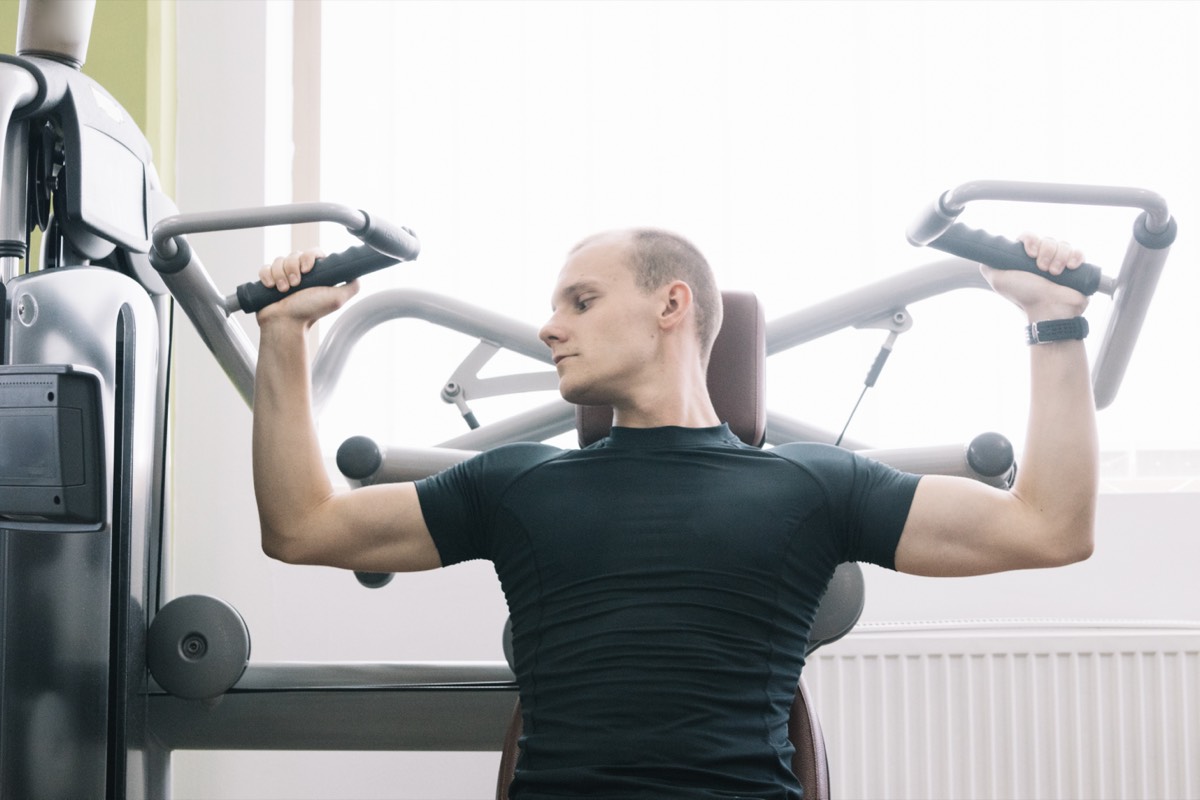
- Resistance machines (leg press, chest press, etc.)
- Smith machine
- Plate-loaded machines
They guide your movement along a fixed or semi-fixed path.
Advantages of Machines
Easier to learn:
The machine guides your movement. Less technique required.
Safer for beginners:
Harder to use dangerous form. Built-in safety features.
Good for isolation:
Target specific muscles without stabilizer fatigue.
Less intimidating:
Clear instructions on the machine. Obvious how to use them.
Useful for working around injuries:
Can train specific muscles while avoiding problematic movements.
Disadvantages of Machines
Fixed movement path:
Your body might not match the machine's movement pattern.
Less functional:
Real life doesn't have guided paths. Free weights better simulate actual movements.
Smaller muscle involvement:
Stabilizers aren't challenged as much.
Limited progression:
Weight jumps are often too large on machines.
Advantages of Free Weights
Full muscle engagement:
Stabilizers work alongside primary muscles.
Functional movement:
Better transfer to real-world activities and sports.
Infinite adjustability:
Small weight increases, endless exercise variations.
More bang for buck:
One barbell can do hundreds of exercises.
Builds coordination:
Learning to control weight improves proprioception.
Disadvantages of Free Weights
Steeper learning curve:
Technique matters more. Takes time to learn.
Higher injury risk:
Poor form can cause injury. Requires attention to detail.
Need for spotters:
Heavy lifts may require assistance.
Intimidation factor:
The free weight area can feel scary for beginners.
Which Is Better for Beginners?
Both. Here's how to use each:
Start With Machines
First 2-4 weeks:
- Learn basic movement patterns safely
- Build initial strength
- Get comfortable in the gym
- Develop mind-muscle connection
Transition to Free Weights
After building foundation:
- Begin with dumbbells (more forgiving than barbells)
- Learn compound movements (squat, deadlift, press)
- Use machines for accessories and isolation work
Continue Using Both
Long-term approach:
- Free weights for compound movements
- Machines for isolation and finishing work
- Cables for constant tension exercises
The Best Machine Exercises for Beginners
- Leg Press: Builds leg strength safely before squatting
- Chest Press: Learn pressing pattern
- Lat Pulldown: Build back strength for eventual pull-ups
- Seated Row: Safe pulling movement
- Leg Curl/Extension: Isolation for quad/hamstring balance
The Best Free Weight Exercises for Beginners
- Goblet Squat: Dumbbell held at chest, teaches squat pattern
- Dumbbell Romanian Deadlift: Learn hip hinge safely
- Dumbbell Bench Press: More forgiving than barbell
- Dumbbell Row: Single-arm, stable position
- Overhead Press (seated with back support): Safe shoulder pressing
Sample Beginner Program Using Both
Day 1:
- Goblet Squat (dumbbell): 3×10
- Leg Press (machine): 3×12
- Dumbbell Bench Press: 3×10
- Seated Cable Row: 3×12
- Plank: 3×20-30 sec
Day 2:
- Dumbbell Romanian Deadlift: 3×10
- Leg Curl (machine): 3×12
- Lat Pulldown (machine): 3×12
- Overhead Press (dumbbell): 3×10
- Dead Bug: 3×10 each side
The Smith Machine: A Note
The Smith machine (barbell on rails) is controversial. It's safer than a free barbell but teaches different movement patterns.
Use for:
- Initial learning of movements
- Working without a spotter
- Specific isolation work
Don't rely on exclusively:
- Movement pattern differs from free barbell
- Doesn't train stabilizers
Progressing From Machines to Free Weights
For Squats
- Leg press → Goblet squat → Barbell back squat
For Bench Press
- Machine chest press → Dumbbell bench → Barbell bench
For Rows
- Cable row → Dumbbell row → Barbell row
For Deadlifts
- Leg curl/hip extension machines → Romanian deadlift → Conventional deadlift
The Bottom Line
Machines and free weights both have value. Beginners can start with machines to learn safely, then transition to free weights as technique improves. Long-term, use free weights for compound movements and machines for isolation work. The best program uses both strategically.
Frequently Asked Questions
Should beginners use machines or free weights?
Are machines good for building muscle?
Why are free weights considered better than machines?
Medical Disclaimer
This content is for informational purposes only. Always consult a healthcare professional before starting any new exercise program.
Related Articles
Put This Knowledge Into Action
Download Axon and get personalized workout plans that incorporate these training principles, tailored to your goals.
Download on App Store